
 By TechOriginHub Editorial Team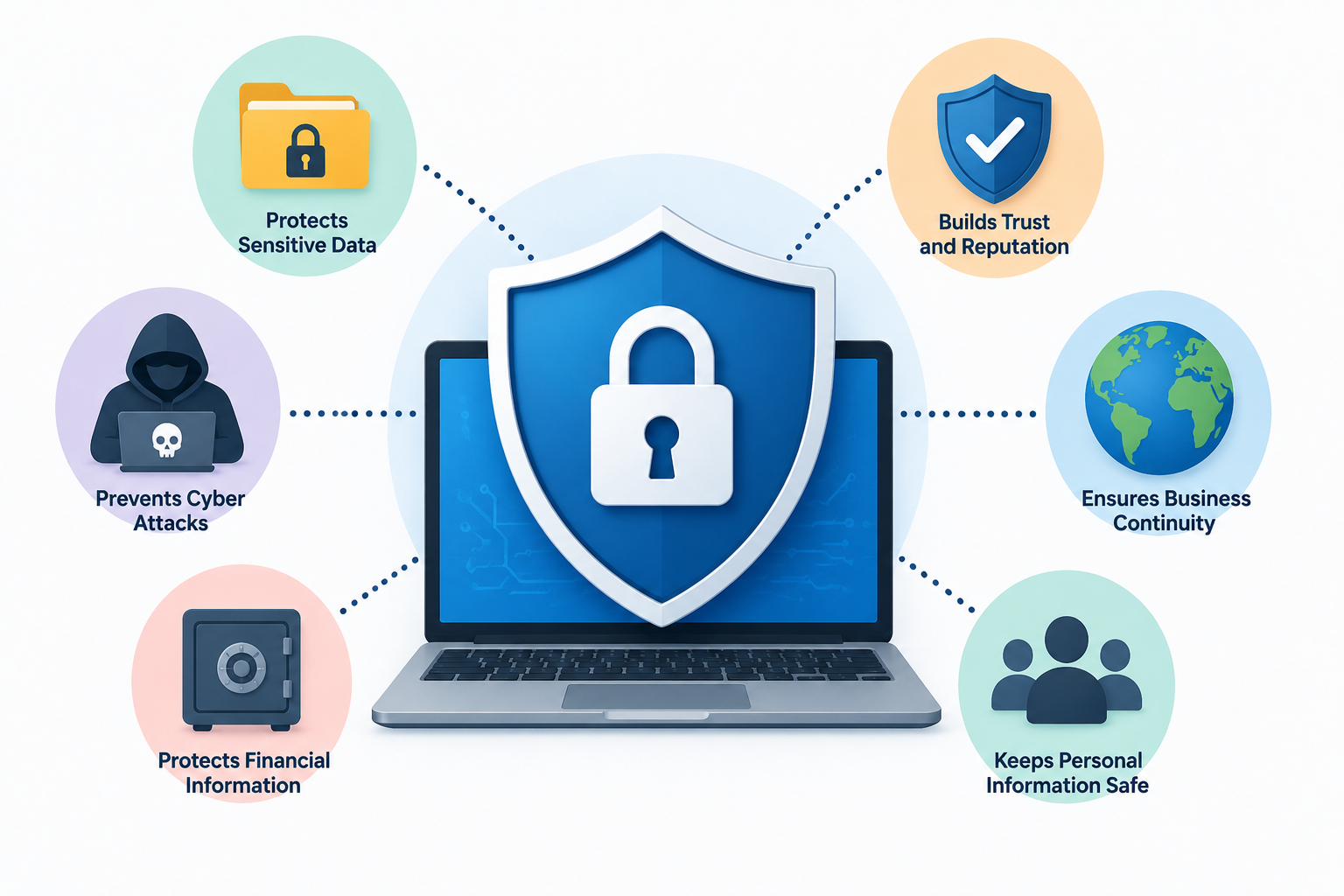
Introduction
Consider everything you did online in the past 24 hours. You checked your bank balance, sent emails, scrolled through social media, shopped on a retail site, streamed a show, and maybe connected to a work system remotely. Every single one of those activities generated data, moved through networks, and relied on digital systems that someone, somewhere, is actively trying to exploit. Understanding why cybersecurity is important is no longer a concern reserved for technology professionals. It is a fundamental life skill for anyone who participates in modern society.
In 2026, the average person has dozens of active online accounts, carries a powerful connected computer in their pocket, and interacts with digital services constantly throughout the day. The average business runs its operations, serves its customers, and stores its most sensitive information in digital environments. Governments administer public services, manage national defense, and maintain citizen records through connected infrastructure.
All of that digital activity represents both extraordinary convenience and extraordinary vulnerability. The threats are real, they are growing, and they affect people who never thought they would be a target.
Quick Answer
Cybersecurity is important because it protects individuals, businesses, and governments from cyber threats that steal personal data, disrupt operations, and cause serious financial harm. Without cybersecurity, online banking, digital communications, business systems, and critical national infrastructure would be dangerously exposed to criminals, fraudsters, and foreign adversaries who actively seek to exploit every available weakness.
What Is Cybersecurity?
Cybersecurity is the practice of protecting computers, networks, applications, and data from unauthorized access, theft, damage, and disruption. It combines technology, processes, and human behavior to defend digital systems against an ever-expanding range of threats.
The field covers everything from the antivirus software on your personal laptop to the security operations centers that monitor the networks of major banks and government agencies around the clock. It addresses threats from individual opportunistic criminals, organized criminal enterprises, politically motivated hackers, and nation-state actors with sophisticated resources and long-term strategic objectives.
If you want a comprehensive foundation on what cybersecurity is and how it works across different domains, our detailed guide on What Is Cybersecurity covers the full landscape including types of cybersecurity, how defenses are structured, and the career paths available in the field.
Why Is Cybersecurity Important?
The question of why cybersecurity matters has a layered answer that touches personal safety, financial security, business survival, and national defense. Let us work through each dimension clearly.
Protecting Personal Information
Your digital life contains more sensitive personal information than most people consciously realize. Your name, home address, date of birth, social security number, passport number, medical history, financial account details, passwords, private messages, and location history all exist in digital form across various platforms and services.
When that information falls into criminal hands, the consequences range from targeted phishing attacks using your personal details to make them more convincing, to full identity theft where criminals open credit accounts, file false tax returns, or commit crimes in your name. Cybersecurity measures protect the integrity of your personal data at every stage of its digital existence.
Preventing Cybercrime
Cybercrime is one of the fastest-growing categories of criminal activity on earth. It is estimated to cost the global economy over $10 trillion annually in 2026, a figure that includes direct theft, business disruption, ransomware payments, recovery costs, legal fees, and regulatory penalties.
Behind every statistic is a real victim. Business owners who lose their savings to wire fraud. Elderly people whose retirement accounts are drained through investment scams. Hospital patients whose care is disrupted by ransomware attacks. Cybersecurity is what stands between criminals and these outcomes.
Financial Security
Financial systems are among the most aggressively targeted by cybercriminals. Banks, payment processors, cryptocurrency platforms, and investment services process enormous volumes of money through digital networks every second.
Cybersecurity protects those systems at the institutional level and protects individual accounts at the personal level. Multi-factor authentication, transaction monitoring, encryption, and fraud detection algorithms all work together to make financial cybercrime harder to commit and faster to detect when it occurs.
Business Continuity
For businesses, a serious cybersecurity incident can halt operations entirely. Ransomware encrypts critical systems and data, making normal business impossible until the attack is resolved. Data breaches trigger regulatory investigations and notification requirements that consume enormous management attention and resources. Service outages from distributed denial of service attacks prevent customers from transacting. Cybersecurity is not just a technology issue for businesses; it is a fundamental operational resilience requirement.
Privacy Protection
Privacy means having control over your personal information and how it is used. In a digital world, maintaining that control requires active protection. Without cybersecurity measures, your private communications can be intercepted, your browsing behavior can be tracked and exploited, your medical information can be exposed, and your private photographs can be stolen and misused.
Cybersecurity creates the technical conditions under which digital privacy can actually be maintained, which is why the two concepts are so closely linked in both policy and practice.
National Security
Modern nations depend on digital infrastructure for functions that are literally vital to public safety and national defense. Power grids, water treatment systems, financial clearing networks, air traffic control, military communications, and emergency services all run on networked digital systems.
Nation-state actors from adversary countries actively probe these systems for vulnerabilities, seeking to understand them well enough to disrupt them during geopolitical conflicts. Cybersecurity at the national level is an extension of national defense, and its importance has grown in direct proportion to how deeply digital systems have become embedded in critical infrastructure.
Trust in Digital Services
The entire digital economy depends on a foundation of trust. People only bank online if they believe their money is safe. They only share health information with digital platforms if they believe it will remain private. They only use cloud services for important business functions if they trust those services to maintain the availability and integrity of their data.
Cybersecurity is what creates and maintains that trust. When it fails at scale, as it does during major breaches, the damage to consumer confidence can persist for years and reshape how entire categories of digital services are perceived.
Why Cybersecurity Matters for Individuals
| Individual Activity | Key Cyber Risk | Primary Protection |
|---|---|---|
| Online banking | Account takeover, fraud | MFA, strong passwords, monitoring |
| Social media | Account hijacking, privacy exposure | Strong passwords, privacy settings, MFA |
| Phishing, account compromise | MFA, suspicious link verification | |
| Smartphones | Device theft, malicious apps | Screen lock, trusted app sources, updates |
| Online shopping | Payment fraud, fake sites | Secure payment methods, site verification |
| Identity | Identity theft, credential theft | Password manager, credit monitoring |
Online Banking
Digital banking has made managing finances dramatically more convenient, and it has also made financial accounts more attractive targets for cybercriminals. Attackers use phishing, malware, and credential theft to gain access to banking accounts. Once inside, they can transfer funds, change contact information to lock out the legitimate account holder, and spend or withdraw money within minutes.
Strong authentication, account monitoring alerts, and awareness of phishing tactics are the primary individual defenses against banking fraud.
Social Media
Social media accounts contain personal information, private messages, and connections to your network of contacts. Compromised accounts are used to send phishing messages to your contacts (who trust you), spread misinformation, conduct romance scams, and extract sensitive information from people who would never engage with a stranger but will respond to a message appearing to come from a friend.
Beyond account compromise, social media privacy settings determine how much information about you is publicly visible and therefore available to attackers crafting targeted social engineering attacks.
Email Accounts
Your primary email account is the master key to your digital life. Password reset links for every other account go there. Financial notifications go there. Sensitive personal and professional communications go there. An attacker who gains access to your email account can reset passwords for banking, social media, shopping, and any other service linked to that address, systematically taking over your entire digital identity.
Protecting email with a strong, unique password and multi-factor authentication is arguably the single highest-impact security action an individual can take.
Smartphones
The smartphone in your pocket contains more sensitive personal information than most people keep anywhere else in their lives, including banking apps, email, contacts, messages, photographs, health data, and location history. It is also carried everywhere and connects to dozens of different networks throughout the day, each one a potential exposure point.
Device encryption, screen locks, careful app permission management, and connection to trusted networks are the primary smartphone security practices.
Shopping Online
E-commerce fraud costs consumers and businesses billions of dollars annually. Fake websites, compromised payment forms, and stolen payment card databases all enable criminals to steal payment information and make unauthorized purchases. Shopping only on verified, secure websites, using credit cards rather than debit cards for better fraud protection, and monitoring statements regularly are practical defenses.
Identity Protection
Identity theft occurs when someone uses your personal information to impersonate you for financial gain. The consequences can take years to fully resolve, including clearing fraudulent debts, disputing false credit inquiries, and untangling legal complications arising from crimes committed in your name. Credit monitoring services, careful handling of sensitive documents, and strong digital account security together reduce identity theft risk significantly.
Why Cybersecurity Is Important for Businesses
Customer Data Protection
Every business that collects customer information carries a legal and ethical responsibility to protect it. That data, which may include names, addresses, payment card numbers, purchase histories, and in some industries medical or financial records, is both valuable to criminals and deeply personal to the customers who trusted the business with it.
A breach of customer data creates immediate notification obligations, potential regulatory penalties, civil liability, and lasting reputational damage that affects customer retention and acquisition long after the technical incident is resolved.
Preventing Financial Losses
The direct financial costs of cybersecurity incidents are substantial. Ransomware payments can reach millions of dollars for large organizations. Forensic investigation and system recovery are expensive. Business email compromise, where attackers impersonate executives to authorize fraudulent wire transfers, has cost businesses tens of billions of dollars globally. Regulatory fines for data protection failures add further financial exposure.
For many small and medium-sized businesses, a serious cybersecurity incident is financially unsurvivable. Research consistently shows that a significant proportion of small businesses that experience major breaches close within a year.
Business Reputation
Reputation is an asset built over years and damaged in moments. A widely reported data breach signals to customers, partners, and investors that the organization cannot be trusted with sensitive information. The reputational consequences of serious cybersecurity failures persist far longer than the technical recovery period and can fundamentally alter a company’s market position.
Regulatory Compliance
Businesses operating in most developed economies face mandatory cybersecurity and data protection requirements. GDPR in Europe, HIPAA in US healthcare, PCI DSS for payment card processing, and an expanding global landscape of sector-specific regulations create significant obligations. Demonstrating effective cybersecurity is not just good practice; it is a legal requirement in many contexts, with substantial penalties for non-compliance.
Employee Security
Employees are both one of an organization’s greatest assets and one of its most significant security risks. Phishing attacks targeting employees are the most common entry point for corporate network breaches. Insider threats, whether malicious or accidental, represent another major exposure. Security awareness training, strong access controls, and the principle of least privilege (giving employees only the access their role genuinely requires) are essential components of a business security program.
Remote Work Protection
The normalization of remote and hybrid work has extended the organizational attack surface significantly. Employees working from home use personal devices, connect through home networks, and access corporate systems across the public internet. Each of these dimensions introduces security risks that did not exist when all work happened inside a corporate perimeter protected by enterprise security tools. VPNs, zero trust access controls, endpoint security, and security awareness training specific to remote work risks are all essential in 2026.
Why Cybersecurity Is Important for Governments
Critical Infrastructure
Government agencies are responsible for the security of infrastructure that the entire population depends on. Power grids, water systems, transportation networks, healthcare systems, and financial clearing mechanisms are all potential targets for attackers seeking to cause widespread disruption or extract concessions.
The consequences of successful attacks on critical infrastructure go far beyond the immediate technical damage. A power grid outage in winter, a compromised water treatment system, or a disrupted financial clearing network can threaten public health and safety on a massive scale.
Public Services
Citizens rely on government digital services for benefits administration, tax filing, healthcare enrollment, licensing, voting systems, and dozens of other functions. When these systems are disrupted through cyberattack, real people cannot access services they depend on. When they are compromised through a breach, the personal information of entire populations is exposed.
National Defense
Military and intelligence systems depend on cybersecurity for secure communications, operational security, and protection of classified information. Adversary nations invest significant resources in developing cyberattack capabilities targeting military and government systems. The cybersecurity of defense systems is an integral part of a nation’s overall defense posture.
Citizen Data
Government databases contain the personal information of every citizen in a jurisdiction. Tax records, immigration records, healthcare records, social security data, criminal justice records, and voting registration information all represent high-value targets. Breaches of government citizen data create harm on a scale that cannot be achieved by targeting any single private sector organization.
Common Cyber Threats That Make Cybersecurity Essential
| Threat Type | Primary Target | How It Works | Potential Impact |
|---|---|---|---|
| Phishing | Individuals, employees | Deceptive messages to steal credentials | Account compromise, financial fraud |
| Malware | Any device | Malicious software installed on systems | Data theft, system damage |
| Ransomware | Businesses, institutions | Encrypts files, demands payment | Operational shutdown, financial loss |
| Data Breaches | Any data holder | Unauthorized extraction of sensitive data | Regulatory fines, reputation damage |
| Password Attacks | Any account | Brute force or credential stuffing | Account takeover |
| Insider Threats | Organizations | Malicious or accidental employee actions | Data loss, sabotage |
| Social Engineering | Individuals, employees | Psychological manipulation | Unauthorized access, fraud |
| DDoS Attacks | Websites, services | Overwhelms systems with traffic | Service disruption, revenue loss |
Phishing
Phishing remains the most common initial attack vector in 2026. Attackers send emails, text messages, and social media messages that appear to come from trusted organizations or individuals. These messages direct recipients to fake websites designed to capture credentials, or contain attachments that install malware when opened.
AI has made phishing significantly more dangerous by enabling attackers to generate convincing, personalized messages at scale, removing the grammatical errors and awkward phrasing that once made phishing easier to spot.
Ransomware
Ransomware attacks encrypt an organization’s files and systems, making normal operations impossible until the attackers provide a decryption key in exchange for payment. The payments demanded can range from thousands to tens of millions of dollars depending on the size and perceived ability to pay of the target. Even organizations that pay do not always receive working decryption tools, and the disruption and recovery costs accumulate regardless of payment decisions.
Data Breaches
A data breach occurs when an unauthorized party accesses and typically extracts sensitive data. Breaches result from hacking, malware, insecure storage, misconfigured cloud systems, and insider actions. The consequences include regulatory notification and investigation requirements, potential fines, civil lawsuits from affected individuals, and lasting reputational damage.
Social Engineering
Social engineering attacks exploit human psychology rather than technical vulnerabilities. An attacker might call an employee impersonating IT support, create urgency around a fictional security incident, and convince the employee to reset their password to one the attacker controls. No technical security tool can fully prevent social engineering; user awareness training is the primary defense.
Real-World Cybersecurity Incidents
The Colonial Pipeline Attack (2021)
In May 2021, DarkSide ransomware criminals successfully attacked Colonial Pipeline, which supplies approximately 45 percent of fuel to the eastern United States. The company proactively shut down its pipeline operations to prevent the malware from spreading to operational systems, causing fuel shortages across multiple states and triggering panic buying.
Colonial Pipeline paid approximately $4.4 million in cryptocurrency ransom. The FBI subsequently recovered a portion of the payment by tracing the cryptocurrency transactions. The attack demonstrated the real-world physical consequences that can follow from cybersecurity failures in critical infrastructure, and prompted significant federal action to strengthen infrastructure security standards.
The lesson organizations should take from Colonial Pipeline is the necessity of network segmentation between IT and operational technology systems, so that ransomware cannot spread from administrative computing environments into the systems that control physical operations.
The Equifax Data Breach (2017)
In 2017, Equifax, one of the three major US credit bureaus, disclosed a data breach that exposed the sensitive personal information of approximately 147 million people. The compromised data included social security numbers, birth dates, addresses, driver’s license numbers, and credit card information for some victims.
The breach resulted from an unpatched vulnerability in a web application framework. Equifax had known about the vulnerability and the available patch for months before the breach occurred but had not applied it. The company ultimately paid approximately $575 million in settlements and regulatory penalties.
The lesson is stark: failing to apply known security patches in a timely manner is not just a technical oversight; it is a decision that can cause harm at massive scale and generate enormous financial and legal consequences.
The NotPetya Attack (2017)
Initially appearing to be ransomware, NotPetya was actually a destructive cyberweapon deployed by Russian military intelligence, disguised as ransomware, and distributed through a Ukrainian accounting software update. It spread rapidly across global corporate networks, causing an estimated $10 billion in damages and permanently destroying data at multiple major corporations including Maersk, Merck, and FedEx subsidiary TNT.
NotPetya demonstrated that organizations can become collateral damage in geopolitical cyberconflicts through no targeted action against them, simply by sharing software or network connections with intended targets. It also demonstrated the devastating scale of damage that state-sponsored cyber operations can achieve.
The Twitter Bitcoin Scam (2020)
In July 2020, attackers compromised the Twitter accounts of numerous high-profile individuals and organizations including Barack Obama, Joe Biden, Elon Musk, Bill Gates, Apple, and Uber. They used these verified accounts to promote a cryptocurrency scam that promised to double any Bitcoin sent to a specific address.
The attackers gained access through a social engineering attack on Twitter employees, obtaining internal administrative tools that allowed them to bypass account security. The incident collected approximately $120,000 in Bitcoin from victims before Twitter could respond.
The lesson is that even platform providers with significant security resources can be compromised through targeted social engineering of their own employees, making user awareness training essential at every level of every organization.
Benefits of Strong Cybersecurity
Strong cybersecurity protects financial assets at every level, from individual savings accounts to corporate treasury systems, reducing the risk of theft through account compromise, fraud, and ransomware.
It prevents identity theft by keeping the personal information criminals need to impersonate you out of their hands.
It maintains business continuity by ensuring that systems remain operational and data remains accessible to authorized users even as attack attempts occur constantly.
It protects privacy by controlling who can access sensitive personal and professional information.
It ensures regulatory compliance, avoiding the financial penalties and legal exposure that result from data protection failures.
It builds and maintains customer trust by demonstrating that an organization takes its responsibility to protect customer data seriously.
It protects intellectual property, including product designs, business strategies, and proprietary research, from theft that could undermine competitive advantages developed through significant investment.
It enables safe digital innovation by providing the security foundation on which new products, services, and business models can be built without unacceptable risk.
It reduces business disruption costs by preventing the operational shutdowns that cybersecurity incidents cause.
It supports national security by protecting the systems that essential public services and defense operations depend on.
It provides competitive advantage, since businesses that can credibly demonstrate strong security practices increasingly win procurement decisions over competitors who cannot.
It protects employees from harm, including the professional consequences of being the entry point for a successful attack.
It reduces cyber insurance premiums, since organizations with demonstrably strong security controls increasingly receive better terms from insurers.
It improves brand reputation by positioning an organization as one that handles sensitive information responsibly.
It creates long-term cost savings, since the cost of effective cybersecurity is consistently lower than the cost of recovering from serious security failures.
Consequences of Poor Cybersecurity
| Consequence | Who Is Affected | Severity | Recovery Time |
|---|---|---|---|
| Financial losses | Individuals, businesses | High to severe | Months to years |
| Identity theft | Individuals | Severe | Years |
| Data loss | Businesses, individuals | High | Variable |
| Reputation damage | Businesses, governments | High | Years |
| Legal issues | Businesses | High | Years |
| Operational downtime | Businesses | High | Days to weeks |
| Customer trust loss | Businesses | Severe | Long-term |
| Regulatory penalties | Businesses | High | Ongoing |
Financial Losses
The financial consequences of poor cybersecurity operate at every scale. An individual whose account is compromised may lose savings accumulated over years. A small business hit by ransomware may face a demand that exceeds its operating capital. A large corporation breached at scale faces remediation costs, regulatory fines, legal settlements, and lost business that can total hundreds of millions of dollars.
Identity Theft
Identity theft creates consequences that persist long after the initial incident. Victims spend years clearing fraudulent debts from their credit records, disputing false credit inquiries, resolving accounts opened fraudulently in their names, and in some cases addressing criminal charges filed against them by someone using their identity. The time and emotional cost of resolving identity theft is enormous even when the direct financial losses are eventually recovered.
Reputation Damage
For businesses, a significant cybersecurity failure changes how customers, partners, and investors perceive the organization. The coverage of a major breach circulates widely and permanently, appearing in search results whenever stakeholders research the company. Rebuilding trust after a serious breach requires years of consistent behavior and transparent communication, and some organizations never fully recover the ground they lose.
Legal Issues
Data protection regulations in most major jurisdictions now carry significant financial penalties for organizations that fail to protect personal data. GDPR can impose fines of up to four percent of global annual revenue. US state laws, including CCPA, add further exposure. Class action lawsuits from affected individuals represent additional legal risk following major breaches.
Best Cybersecurity Practices
| Practice | Category | Who Needs It | Priority |
|---|---|---|---|
| Use strong unique passwords | Authentication | Everyone | Critical |
| Enable multi-factor authentication | Authentication | Everyone | Critical |
| Use a password manager | Authentication | Everyone | High |
| Keep software updated | Patching | Everyone | Critical |
| Install antivirus software | Endpoint protection | Everyone | High |
| Use a VPN on public Wi-Fi | Network security | Everyone | High |
| Back up data regularly | Data protection | Everyone | Critical |
| Enable device encryption | Data protection | Everyone | High |
| Verify emails before clicking | Phishing defense | Everyone | Critical |
| Use secure browsing habits | Safe browsing | Everyone | High |
Use strong, unique passwords for every account you hold. A strong password is at least 16 characters long, combines uppercase and lowercase letters, numbers, and special characters, and bears no relationship to personal information like names, birthdays, or common words.
Never reuse passwords across multiple accounts. If one service is breached and your credentials are exposed, attackers immediately try them on banking, email, social media, and every other major service in a technique called credential stuffing.
Use a password manager to generate, store, and auto-fill complex unique passwords without the impossible cognitive burden of memorizing dozens of them. Options like Bitwarden, 1Password, and similar tools make this practical for anyone regardless of technical sophistication.
Enable multi-factor authentication on every account that supports it, starting with email, banking, and social media accounts. MFA means that even if an attacker obtains your password, they cannot access your account without the second factor.
Keep your operating system, applications, and security software updated promptly. The vast majority of successful cyberattacks exploit known vulnerabilities that already have available patches. Every day of delay is a day of unnecessary exposure.
Install reputable antivirus and endpoint security software on your computers and keep its definitions updated continuously.
Use a VPN whenever connecting to public Wi-Fi networks, including those in airports, hotels, coffee shops, and libraries. Public networks can be monitored by anyone else connected to them, and a VPN encrypts your traffic to prevent interception.
Back up your important data regularly, following the 3-2-1 rule: three copies of your data, on two different types of media, with one copy stored off-site or in the cloud. Tested, current backups are the most effective defense against ransomware.
Enable full disk encryption on laptops and smartphones. If your device is lost or stolen, encryption ensures that the data on it cannot be accessed without your credentials.
Think critically before clicking any link in an email, text message, or social media post. Verify that the sender is who they claim to be and that links go where they appear to lead before clicking.
Use browser extensions that block malicious websites, tracking scripts, and advertisements that can serve as malware delivery mechanisms.
Review the permissions granted to applications on your phone and computer regularly. Revoke any permissions that an app does not genuinely need to function.
Secure your home Wi-Fi network with a strong password and WPA3 encryption. Change the default administrator password on your router immediately after setup.
Be cautious about what personal information you share publicly on social media. Attackers use publicly available personal details to craft convincing targeted phishing messages and to answer security questions.
Use a credit freeze if you are not actively applying for credit. A credit freeze prevents criminals from opening new credit accounts in your name even if they have your personal information.
Enable login alerts on your important accounts so you receive immediate notification of any access from a new device or location.
Do not plug unknown USB devices into your computers. Infected USB drives remain a common malware delivery mechanism.
Check whether your email addresses or passwords have appeared in known data breaches using free services specifically designed for this purpose, and change any exposed credentials immediately.
Educate family members, including children and elderly relatives, about online threats. A household member who clicks a phishing link compromises the entire home network.
For businesses, conduct regular security awareness training for all employees and follow a principle of least privilege access to ensure each person can access only what their role genuinely requires.
Future of Cybersecurity
Artificial Intelligence
AI is transforming cybersecurity on both sides of the offense-defense divide. Defenders use AI to analyze network behavior in real time, identifying anomalies that indicate attacks in progress at a speed and scale no human team can match. AI also powers automated threat hunting, vulnerability identification, and incident response orchestration.
Attackers use AI to generate more convincing phishing content, automate vulnerability scanning, adapt malware to evade detection, and conduct deepfake-based social engineering attacks. The AI arms race in cybersecurity will define the field for the foreseeable future, with advantage shifting continuously between attack and defense.
Zero Trust Security
Zero trust is a security model based on the principle that no user, device, or system should be trusted by default, even within the organizational network perimeter. Every access request must be verified continuously based on identity, device security posture, location, and behavioral context.
Zero trust adoption has accelerated significantly as remote work has made the traditional network perimeter concept obsolete. In 2026, zero trust architecture is the emerging standard for enterprise security design.
Cloud Security
As organizational workloads continue migrating to cloud platforms, cloud security has become one of the most strategically critical areas of cybersecurity investment. Misconfiguration of cloud environments remains among the most common causes of significant data breaches, and the shared responsibility model requires organizations to actively manage their portion of cloud security rather than assuming the provider handles everything.
IoT Security
The Internet of Things continues expanding rapidly, with billions of connected devices including smart home equipment, industrial sensors, medical devices, and connected vehicles creating an enormous and poorly secured attack surface. IoT security standards are maturing but remain inconsistent, and the challenge of securing devices with minimal processing power and long operational lifetimes continues to require creative approaches.
Quantum Computing
Quantum computing poses a long-horizon but serious threat to current encryption standards. When quantum computers reach sufficient capability, they will be able to break the asymmetric encryption algorithms that currently protect most sensitive digital communications and data storage. Post-quantum cryptographic standards developed by NIST are being implemented across critical systems to address this threat before quantum capability reaches the relevant threshold.
Cybersecurity Careers
The cybersecurity talent shortage remains one of the most pressing challenges in the field. Millions of unfilled positions globally create exceptional career opportunities for people entering the field across roles including security analysis, penetration testing, incident response, cloud security engineering, security architecture, and executive leadership.
Frequently Asked Questions
Why is cybersecurity important?
Cybersecurity is important because virtually every aspect of modern life depends on digital systems that criminals, foreign adversaries, and malicious actors actively seek to compromise. It protects personal information, financial assets, business operations, and national infrastructure from threats that cause real financial harm, operational disruption, and lasting damage to individuals and organizations.
What happens if cybersecurity is ignored?
Ignoring cybersecurity creates exposure to financial theft, identity fraud, ransomware attacks, data breaches, regulatory penalties, reputational damage, and operational disruption. For individuals, the consequences can include drained accounts and years of identity theft recovery. For businesses, ignoring cybersecurity can mean existential financial harm and permanent reputation damage. For governments, it means exposed citizen data and vulnerable critical infrastructure.
How does cybersecurity protect businesses?
Cybersecurity protects businesses by preventing unauthorized access to systems and data, defending against malware and ransomware that could halt operations, protecting customer data from theft and exposure, ensuring regulatory compliance, maintaining the business reputation that customer trust depends on, and providing the security foundation that enables digital business operations and remote work.
Why is cybersecurity important for students?
Students are frequent targets of phishing attacks, academic fraud schemes, and account compromises. They use email, online learning platforms, banking apps, and social media containing sensitive personal information. Understanding cybersecurity basics helps students protect their accounts, their personal information, and their academic records from criminals who specifically target younger users who may not yet be security-aware.
What are the biggest cyber threats?
The biggest cyber threats in 2026 include ransomware attacks that encrypt organizational systems and demand payment, phishing attacks that steal credentials and deploy malware, data breaches that expose sensitive personal and business information, business email compromise scams that authorize fraudulent financial transfers, and nation-state cyberattacks targeting critical infrastructure and government systems.
How can I improve my cybersecurity?
Start with the fundamentals: enable multi-factor authentication on all important accounts, use a password manager to create and store strong unique passwords, apply software updates promptly, install reputable security software, back up your data regularly, and learn to recognize phishing attempts. These steps address the most common attack vectors and provide substantial protection without requiring technical expertise.
Is antivirus enough?
No. Antivirus is one important layer of protection but not a complete security solution. Modern cybersecurity requires multiple complementary defenses including strong authentication, timely software updates, user awareness, network security, data backups, and safe online behaviors. Antivirus handles known malware effectively but cannot protect against phishing, weak passwords, social engineering, or the human errors that cause most successful breaches.
What is multi-factor authentication?
Multi-factor authentication requires users to verify their identity using at least two different factors before accessing an account. Typically this combines something you know, like your password, with something you have, such as a one-time code from an authenticator app or a text message, or something you are, like a fingerprint or face scan. MFA prevents account takeover even when passwords are stolen because attackers lack the second factor.
What is identity theft?
Identity theft occurs when someone uses your personal information without your consent to impersonate you, typically for financial gain. Criminals use stolen identity information to open credit accounts, take out loans, file fraudulent tax returns, commit other crimes in your name, or gain access to your existing accounts. Resolving identity theft takes significant time, effort, and emotional energy, and the consequences can persist for years.
What is a data breach?
A data breach is a security incident in which unauthorized individuals gain access to sensitive, protected, or confidential data and typically extract it for criminal use or exposure. Breaches result from hacking, malware, misconfigured systems, insider actions, or accidental exposure. The consequences include regulatory notification requirements, potential fines, legal liability, and lasting reputational damage for the affected organization.
Why is cybersecurity important for remote work?
Remote work extends the organizational attack surface significantly. Employees working from home use personal devices, home networks, and public internet connections rather than corporate-controlled environments. Each element introduces security risks including insecure home Wi-Fi, unmanaged devices with outdated software, and connections traversing the public internet without enterprise-grade protection. VPNs, zero trust access controls, endpoint security, and remote-specific security awareness training are essential for organizations with remote workers.
What is digital privacy?
Digital privacy refers to the right and ability to control your personal information in digital environments, including what is collected about you, how it is used, and who has access to it. Cybersecurity enables digital privacy by protecting the systems and communications through which personal information flows from unauthorized access, interception, and exploitation.
Can small businesses be hacked?
Yes, and they are targeted regularly. Small businesses are attractive to attackers precisely because they often lack the security resources of larger organizations while still holding valuable customer data and financial assets. Research consistently shows that a significant proportion of cyberattacks target small and medium businesses. Fortunately, implementing fundamental security practices provides substantial protection even without enterprise-level security budgets.
Is cybersecurity a good career?
Yes. Cybersecurity is one of the most in-demand, well-compensated, and intellectually challenging career fields in technology. The persistent global talent shortage means qualified professionals have strong job security, competitive compensation, and significant career development opportunities. The field also offers the meaningful purpose of protecting individuals, organizations, and critical infrastructure from genuine harm.
What is the future of cybersecurity?
The future of cybersecurity involves AI-powered threat detection and response, widespread zero trust architecture adoption, stronger cloud security standards, growing IoT security regulation, post-quantum cryptography implementation, and continued expansion of the cybersecurity workforce to address the persistent talent shortage. The fundamental challenge of defending against adaptive, motivated adversaries will continue requiring continuous innovation in both technology and human expertise.
People Also Ask
Why is cybersecurity important?
Cybersecurity is important because it protects the digital systems that modern life depends on from criminals and adversaries who seek to steal, disrupt, or damage them. It protects personal information, financial assets, business operations, and national infrastructure from threats that grow more sophisticated every year.
Why does cybersecurity matter?
Cybersecurity matters because every connected device, every online account, and every digital transaction represents both value and vulnerability. Without cybersecurity, the convenience of the digital world comes with unacceptable risk of financial harm, privacy violation, and operational disruption.
What are the benefits of cybersecurity?
The benefits include financial protection, privacy preservation, business continuity, regulatory compliance, customer trust, reputational protection, competitive advantage, and the security foundation that enables safe digital innovation across industries.
Why is cybersecurity important for businesses?
Businesses face cyber threats that can cause direct financial losses, expose customer data, halt operations, trigger regulatory penalties, and permanently damage the reputation that customer relationships depend on. Effective cybersecurity is a fundamental business continuity and competitive requirement.
Why is cybersecurity important for students?
Students carry sensitive personal data across multiple online platforms and are specifically targeted by phishing and fraud schemes. Understanding basic cybersecurity helps students protect their accounts, privacy, and financial information from criminals who target younger users.
What are the biggest cybersecurity risks?
The biggest risks include ransomware attacks, phishing campaigns, data breaches, business email compromise, insider threats, misconfigured cloud systems, unpatched software vulnerabilities, and nation-state attacks on critical infrastructure.
How can I stay safe online?
Enable multi-factor authentication, use unique strong passwords with a password manager, update software promptly, back up data regularly, use a VPN on public networks, think critically before clicking links, and stay aware of current phishing techniques.
What happens after a cyber attack?
After a cyber attack, affected individuals and organizations must contain the damage, assess what was compromised, notify relevant parties including regulators and affected individuals as required by law, recover systems and data, investigate the root cause, and implement changes to prevent recurrence.
Can small businesses benefit from cybersecurity?
Absolutely. Small businesses face the same threats as large organizations with fewer resources to absorb the consequences. Even fundamental security practices, including MFA, strong passwords, patching, and employee training, provide substantial protection and are well within reach for businesses of any size.
What is the future of cybersecurity?
The future involves AI-powered defense and offense, zero trust architecture as the standard enterprise security model, stronger cloud and IoT security requirements, post-quantum cryptography implementation, and continued growth in the cybersecurity workforce to meet demand that currently exceeds supply.
References
- CISA. (2026). Cybersecurity and Infrastructure Security Agency. https://www.cisa.gov
- NIST. (2026). NIST Cybersecurity Framework. https://www.nist.gov/cyberframework
- Microsoft. (2026). Microsoft Security. https://www.microsoft.com/security
- Google. (2026). Google Safety Center. https://safety.google
- Cisco. (2026). Cisco Security. https://www.cisco.com/security
- OWASP. (2026). Open Web Application Security Project. https://owasp.org
Author Bio
TechOriginHub Editorial Team
The TechOriginHub Editorial Team is a trusted group of cybersecurity specialists, technology writers, IT professionals, and digital security researchers committed to delivering accurate, practical, and easy-to-understand technology content. Our team covers cybersecurity, artificial intelligence, software, cloud computing, programming, and emerging technologies, helping readers stay informed in an increasingly connected world. Every article is thoroughly researched, fact-checked, and reviewed using trusted industry sources to ensure accuracy, clarity, and compliance with Google’s Helpful Content and E-E-A-T guidelines. Our mission is to empower individuals and businesses with reliable technology knowledge and practical cybersecurity best practices to stay safe online.
Disclaimer
This article is for informational and educational purposes only. Cybersecurity threats, technologies, software, regulations, and best practices continue to evolve. While every effort has been made to ensure the accuracy of the information presented, readers should always follow official cybersecurity guidance and keep their devices, accounts, and software updated. TechOriginHub is not responsible for any loss or damage resulting from the use of the information provided in this article.
 saman zahra