
 By Saad Qureshi
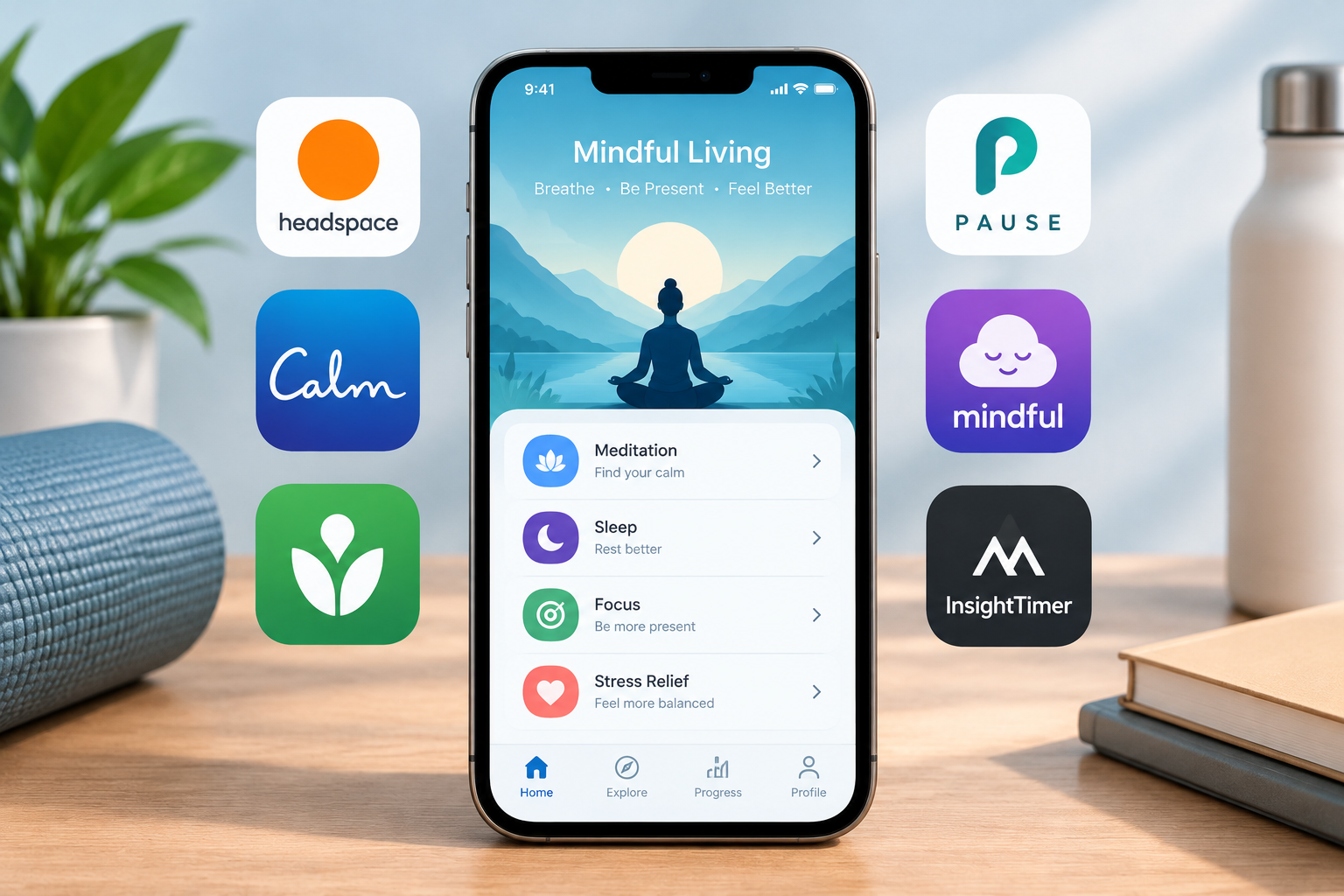
Your phone is probably one of the biggest reasons your mind feels busy. Notifications, endless scrolling, messages, and news all pull at your attention all day long. So it may sound strange, but your phone can also be one of the easiest ways to slow down.
Mindfulness apps guide you through short meditations, breathing exercises, sleep stories, and calming sounds. Some take just two or three minutes a day. The best ones make it easy to build a habit, even if you have never meditated before.
In this guide, we compare the best mindfulness apps in 2026, including completely free options, with verified prices, what each app does best, and how to choose the right one for you.
Quick Info: Best Mindfulness Apps at a Glance
| App | Best for | Price (US) | Free option |
|---|---|---|---|
| Headspace | Beginners who want structure | $12.99/month or $69.99/year | Free trial |
| Calm | Sleep, relaxation, and sleep stories | About $14.99 to $16.99/month or $69.99 to $79.99/year | 7-day trial, limited free content |
| Insight Timer | Best free library | Free, or MemberPlus $9.99/month or $59.99/year | Yes, large free library |
| Healthy Minds Program | Best fully free, science-based option | Free | Fully free |
| Medito | Free with no ads | Free (nonprofit) | Fully free |
| Happier (formerly Ten Percent Happier) | Skeptics and practical learners | Check current price | Free trial |
| Smiling Mind | Kids, teens, and families | Free | Fully free |
Prices are typical US prices as of October 2026. They can vary by country and by where you buy (app store or website), and may not include taxes.
Key Takeaways
- Best for beginners: Headspace, with clear step-by-step courses.
- Best for sleep: Calm, known for its sleep stories and soothing sounds.
- Best free app: Insight Timer, with a huge free library from thousands of teachers.
- Best completely free and research-based: Healthy Minds Program.
- Best for families and kids: Smiling Mind.
- Start small. Five minutes a day is enough to begin, and consistency matters more than session length.
- Apps are not therapy. They can help with everyday stress, but they are not a replacement for professional care.
What Is a Mindfulness App?
Mindfulness means paying attention to the present moment, gently and without judging yourself. A mindfulness app helps you practice this with:
- Guided meditations, where a teacher talks you through each step
- Breathing exercises for quick stress relief
- Sleep stories and soundscapes to help you wind down
- Courses that teach mindfulness over several days or weeks
- Timers for silent meditation
- Mood tracking and reminders to help you build a habit
Most of these apps work on iPhone and Android, and many also run on tablets, computers, and smart speakers. Always download them from your phone’s official app store. If you are new to downloading apps, our guide on what an app store is explains how it works and how to stay safe.
1. Headspace: Best for Beginners
Price: $12.99 per month or $69.99 per year. Free trial available (commonly 7 days on monthly and 14 days on annual plans). Student and family plans are also offered.
Headspace is one of the most popular mindfulness apps in the world, and it is especially good for people who have never meditated. Its friendly animations and clear courses make the idea of meditation feel simple and approachable.
What Headspace does well
- Structured beginner courses that teach the basics step by step
- Short sessions you can fit into a busy day
- Sleep, focus, and movement content in one app
- Clean, friendly design that does not feel overwhelming
Where it falls short
- Very little content without a subscription
- Experienced meditators may find it too basic
Best for
Complete beginners who want a clear plan and a consistent, friendly voice to follow.
2. Calm: Best for Sleep and Relaxation
Price: About $14.99 to $16.99 per month, or $69.99 to $79.99 per year, depending on where you subscribe. A family plan costs $99.99 per year for up to six people, and Calm’s help center lists a lifetime option at $499.99. A 7-day free trial is available.
Calm is best known for its Sleep Stories, bedtime stories read in soothing voices to help you drift off. It also offers the Daily Calm meditation, breathing exercises, relaxing music, and nature sounds.
What Calm does well
- Huge sleep library, including stories, music, and soundscapes
- Polished, relaxing design
- Good variety of meditations for stress and anxiety
- Family plan to share with up to six people
Where it falls short
- Prices differ between the app store and website, which can be confusing
- Limited free content after the trial
Best for
People who struggle to switch off at night or want calming background sounds during the day.
Money tip: Calm’s own help center notes that prices can vary by country and between calm.com and in-app purchases. Compare both before you subscribe.
3. Insight Timer: Best Free Mindfulness App
Price: Free. The optional MemberPlus plan costs $9.99 per month or $59.99 per year.
Insight Timer has one of the largest free meditation libraries available, with guided sessions from thousands of teachers around the world. Many reviewers rank it the best free mindfulness app by a wide margin.
What Insight Timer does well
- Huge free library covering many styles and traditions
- Customizable meditation timer with interval bells, great for silent practice
- Live sessions and community features
- Courses from well-known teachers
Where it falls short
- So much content that it can feel overwhelming at first
- Less structured than Headspace
- Some courses and offline downloads need MemberPlus
Best for
Budget-conscious users and anyone who wants variety without paying.
4. Healthy Minds Program: Best Fully Free, Science-Based App
Price: Free
The Healthy Minds Program was created by Healthy Minds Innovations, a nonprofit linked to research on well-being and the mind. It is completely free and focuses on skill-building through a clear program, combining short lessons with guided practice.
What it does well
- Completely free, with no premium tier
- Structured program built around research on well-being
- Practice while active, with options to meditate while walking or doing chores
Where it falls short
- Smaller library than Calm or Insight Timer
- Fewer sleep features
Best for
Anyone who wants a serious, structured mindfulness program at no cost.
5. Medito: Best Free App With No Ads
Price: Free
Medito is run by a nonprofit and offers guided meditations, courses, and sleep content completely free, with no ads and no paywall.
What it does well
- 100% free with no ads
- Beginner-friendly courses
- Simple, distraction-free design
Where it falls short
- Smaller selection than the big paid apps
- Fewer advanced features
Best for
People who want a clean, free app without upsells.
6. Happier (Formerly Ten Percent Happier): Best for Skeptics
Price: Check the current price in your app store. A free trial is usually available.
Happier, previously called Ten Percent Happier, takes a practical, no-nonsense approach to mindfulness. It is popular with people who feel other apps are too soft or too spiritual. Sessions often include short talks that explain the science and reasoning behind each practice.
What it does well
- Practical, down-to-earth teaching
- Courses on real-life topics like stress, anxiety, and relationships
- Well-known meditation teachers
Where it falls short
- One of the more expensive options
- Less sleep content than Calm
Best for
Skeptics, busy professionals, and anyone who wants to understand why mindfulness works.
7. Smiling Mind: Best for Kids and Families
Price: Free
Smiling Mind is a free app developed in Australia with programs for children, teenagers, adults, schools, and workplaces.
What it does well
- Completely free
- Age-specific programs for kids and teens
- Easy for families to use together
Where it falls short
- Simpler design and fewer features than the big paid apps
Best for
Parents who want to introduce mindfulness to their children, and teachers looking for classroom tools.
Other Mindfulness Apps Worth a Look
- Balance: Builds a personalized plan based on your answers to a few questions.
- Waking Up: Deeper, philosophy-focused meditation, popular with experienced meditators.
- Breethe: Meditation, sleep, and wellness content in a single app.
Check each app’s official listing for current prices in your country.
Mindfulness Apps Compared Side by Side
| Feature | Headspace | Calm | Insight Timer | Healthy Minds | Medito |
|---|---|---|---|---|---|
| Monthly price (US) | $12.99 | About $14.99 to $16.99 | Free or $9.99 | Free | Free |
| Yearly price (US) | $69.99 | About $69.99 to $79.99 | Free or $59.99 | Free | Free |
| Free content | Very limited | Limited | Very large | Full app | Full app |
| Beginner courses | Excellent | Good | Good | Excellent | Good |
| Sleep content | Good | Excellent | Good | Basic | Good |
| Meditation timer | Basic | Basic | Excellent | Basic | Basic |
| Family plan | Yes | Yes | No | Not needed | Not needed |
| Best for | Beginners | Sleep | Free variety | Free structure | Free, no ads |
How to Choose the Right Mindfulness App
| If you want… | Choose |
|---|---|
| A simple, guided start as a complete beginner | Headspace |
| Better sleep and relaxing sounds | Calm |
| The most free content | Insight Timer |
| A structured program at no cost | Healthy Minds Program |
| A free app with no ads | Medito |
| Practical, science-focused teaching | Happier |
| Something for your kids | Smiling Mind |
Smart approach: Start with a free app like Insight Timer or Healthy Minds. If you find yourself using it most days after a couple of weeks, try a paid app’s free trial to see if the extra features are worth it to you.
How to Get the Most From a Mindfulness App
- Start with 3 to 5 minutes a day. Short and regular beats long and rare.
- Pick a fixed time, such as right after waking up or before bed.
- Turn on gentle reminders inside the app.
- Use headphones in noisy places.
- Do not judge your practice. A wandering mind is normal. Gently bringing your attention back is the practice.
- Try different styles. Breathing, body scans, walking meditation, and loving-kindness all feel different.
- Turn on Do Not Disturb during sessions so notifications do not interrupt you.
Use mindfulness to balance screen time
It is a bit ironic, but many people use mindfulness apps to cut down on mindless scrolling. A quick breathing exercise is a good replacement when you notice yourself reaching for social media out of habit. Our guide on what a social media app is explains how these apps are designed to hold your attention, which can help you use them more intentionally.
Privacy: What to Know About Wellness Apps
Mindfulness apps may collect personal information, such as mood logs, journal entries, sleep data, and how often you use the app. Before you commit to one:
- Read the privacy policy to see what is collected and whether it is shared.
- Check app permissions and turn off anything the app does not need, like location.
- Use a strong password for your account.
- Keep the app private if you share your phone. Our guide on how to hide apps on iPhone shows how to keep personal apps out of sight.
Tips to Save Money
- Use free trials and set a reminder to cancel before you are charged.
- Choose annual plans if you know you will keep using the app. They usually cost about half the monthly price over a year.
- Check family and student plans. Headspace and Calm both offer family plans.
- Compare app store and website prices, since they can differ.
- Check your employer, school, or insurance. Some offer free access to mindfulness apps as a benefit.
- Remember that deleting an app does not cancel the subscription. Cancel it in your app store or on the app’s website.
Can Mindfulness Apps Really Help?
Many people find that regular mindfulness practice helps them feel calmer, sleep better, and handle stress more easily. Research on mindfulness programs has shown benefits for stress and well-being, though results vary from person to person.
It is important to be realistic:
- Apps are a tool, not a cure. They work best with regular practice.
- They are not a replacement for professional help. If you are dealing with ongoing anxiety, depression, or other mental health concerns, talk to a doctor or qualified mental health professional.
- If you are in crisis or thinking about harming yourself, contact your local emergency number or a crisis helpline in your country right away.
Frequently Asked Questions
What is the best mindfulness app in 2026?
Headspace is the best for beginners, Calm is the best for sleep, and Insight Timer is the best free option. The right choice depends on what you want to improve.
What is the best free mindfulness app?
Insight Timer has the largest free library. Healthy Minds Program, Medito, and Smiling Mind are also completely free.
How much does Headspace cost?
Headspace costs $12.99 per month or $69.99 per year in the US, with a free trial available.
How much does Calm cost?
Calm usually costs about $14.99 to $16.99 per month, or $69.99 to $79.99 per year, depending on where you subscribe. A family plan costs $99.99 per year.
Is Headspace or Calm better?
Headspace is better for structured beginner learning. Calm is better for sleep and relaxation. Both offer free trials, so you can try each one.
How long should I meditate each day?
Start with 3 to 5 minutes. As it becomes a habit, you can increase to 10 or 20 minutes if you want.
Are mindfulness apps good for anxiety?
Many people find them helpful for everyday stress and worry. However, they are not a replacement for professional treatment. If anxiety affects your daily life, speak to a doctor or therapist.
Are there mindfulness apps for kids?
Yes. Smiling Mind is a free app with programs designed for children and teenagers.
Do mindfulness apps work offline?
Many apps let you download sessions to use offline, but this feature is sometimes only available on paid plans.
Does deleting the app cancel my subscription?
No. Cancel your subscription through your app store or the app’s website before deleting it.
Final Thoughts
The best mindfulness app is the one you will actually open every day. If you are brand new, Headspace makes it easy to start. If sleep is your biggest struggle, Calm is a great fit. And if you do not want to pay anything, Insight Timer, Healthy Minds Program, and Medito are genuinely excellent free options.
Start with just a few minutes a day, be patient with yourself, and let the habit grow naturally.
References
- Calm Help Center: How Calm subscriptions are billed and renewed
- Choosing Therapy: Best Mindfulness Apps of 2026
Disclaimer
This article is for general information only and is not medical or mental health advice. Mindfulness apps are not a substitute for diagnosis or treatment by a qualified professional. If you have a mental health condition or are experiencing distress, please contact a doctor or licensed mental health professional, and in an emergency, contact your local emergency services. App features, prices, and free trial terms change often and vary by country and platform. TechOriginHub is not affiliated with any app mentioned, and this article is not sponsored and contains no affiliate links.