
 By TechOriginHub Editorial Team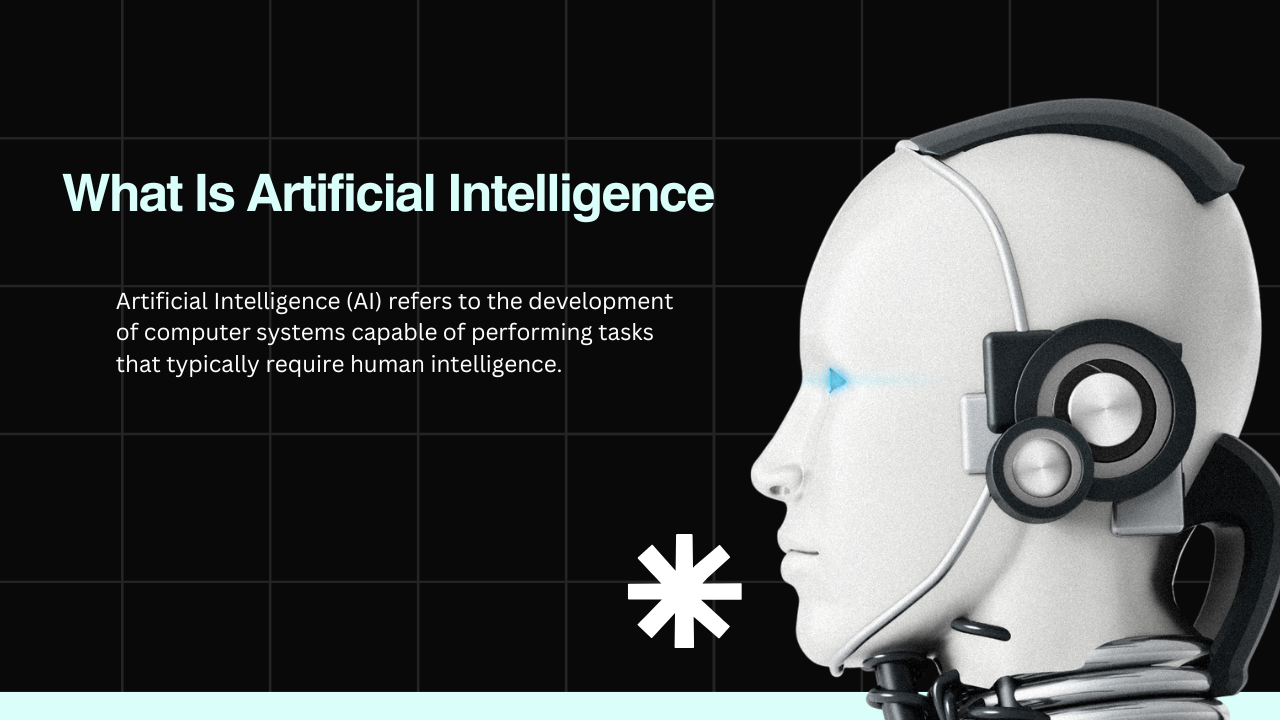
Introduction
Imagine waking up in the morning, asking your phone for the weather, getting a personalized playlist on Spotify, and receiving a package that Amazon’s algorithm predicted you’d want before you even ordered it. That is Artificial Intelligence quietly working in the background of your everyday life.
What Is Artificial Intelligence? It is one of the most important and most talked-about technologies of our time. Yet, for many people, AI still feels like something out of a science fiction movie — robots, supercomputers, and far-off futures. The reality, however, is far more grounded and far more fascinating.
In 2026, AI is not just a tech buzzword. It is reshaping industries, transforming how doctors treat diseases, how students learn, how businesses operate, and how governments make decisions. Whether you are a student, a professional, or simply a curious person trying to understand the world better, this guide breaks down everything you need to know about AI — without the jargon.
Let us start from the very beginning.
Featured Snippet Answer
What Is Artificial Intelligence?
Artificial Intelligence is the ability of a computer or machine to perform tasks that normally require human intelligence, such as understanding language, recognizing images, making decisions, and learning from experience. AI systems use data, algorithms, and models to simulate intelligent behavior.
What Is Artificial Intelligence?
Artificial Intelligence, commonly known as AI, refers to the simulation of human-like intelligence in machines. These machines are programmed to think, learn, reason, solve problems, and even understand emotions — tasks we once believed only humans could perform.
The simplest way to understand AI is through an everyday example. When you type a question into Google and it instantly understands what you mean, suggests related searches, and delivers accurate results — that is AI at work. When Netflix recommends a show you end up loving, that is AI analyzing your viewing habits and making a prediction.
At its core, AI is about building computer systems that can make smart decisions without being explicitly told what to do every single time. Instead of following a rigid set of rules, AI systems learn from experience, adapt over time, and improve their own performance.
The formal definition, as described by computer scientist John McCarthy who coined the term in 1956, is: “the science and engineering of making intelligent machines.” Today, that definition has expanded enormously to include everything from voice assistants to self-driving cars.
History of Artificial Intelligence
Understanding where AI came from helps you appreciate how far it has come. The journey spans nearly seven decades and is filled with remarkable breakthroughs, frustrating setbacks, and world-changing innovations.
Early AI (1950s–1960s)
The story of AI begins with a British mathematician named Alan Turing. In 1950, he published a landmark paper asking, “Can machines think?” He proposed a test — now called the Turing Test — to determine whether a machine could exhibit intelligent behavior indistinguishable from a human.
In 1956, John McCarthy organized the Dartmouth Conference, which is widely considered the official birth of AI as a field of study. Early researchers were confident they could build thinking machines within a generation. Programs like ELIZA, an early chatbot created at MIT in the 1960s, seemed to prove it was possible.
AI Winter (1970s–1980s)
Progress slowed dramatically. Computers lacked the processing power needed to run complex AI programs. Funding dried up. Researchers overpromised and underdelivered. This period became known as the “AI Winter” — a time of disappointment and skepticism.
There were actually two distinct AI winters: one in the 1970s and another in the late 1980s. During these years, many believed AI was little more than science fiction.
Modern AI Revolution (1990s–2010s)
Everything changed when computers became more powerful and data became more abundant. In 1997, IBM’s Deep Blue defeated world chess champion Garry Kasparov — a historic milestone. Machine learning techniques began to mature. The internet generated enormous amounts of data for AI systems to learn from.
By the 2010s, companies like Google, Facebook, and Amazon were investing billions into AI research. Self-driving cars, image recognition, voice assistants like Siri and Alexa — AI was suddenly everywhere.
Generative AI Era (2020s–Present)
The launch of ChatGPT by OpenAI in November 2022 marked perhaps the biggest single moment in AI’s public history. Suddenly, anyone with an internet connection could have a conversation with an AI system that sounded remarkably human. Generative AI — AI that can create text, images, music, video, and code — became the defining technological story of the decade.
By 2026, generative AI tools are embedded in virtually every major software platform. The race to build smarter, safer, and more capable AI systems has never been more intense.
How Does Artificial Intelligence Work?
This is the question most people want answered. AI can seem mysterious, but the core mechanics are surprisingly logical once you break them down.
Data
Everything starts with data. AI systems learn from enormous amounts of information — text, images, videos, numbers, sound recordings. The more relevant, high-quality data an AI system has access to, the better it performs. Think of data as the raw material that feeds the entire AI engine.
Algorithms
An algorithm is simply a set of instructions that tells a computer how to process information. In AI, algorithms are designed to find patterns within data, make decisions, and generate outputs. Different tasks require different types of algorithms.
Machine Learning
Machine Learning (ML) is a subset of AI where systems learn from data without being explicitly programmed for every task. Instead of telling the computer exactly what to do in every situation, you give it data and let it figure out the patterns on its own.
For example, if you show a machine learning model thousands of images of cats and dogs and label each one, the model learns to distinguish between cats and dogs. Show it a new image, and it can make a confident prediction.
Deep Learning
Deep Learning takes machine learning further. It uses structures called neural networks — inspired loosely by the human brain — to process data in multiple layers. Each layer extracts increasingly complex features from the data.
Deep learning is responsible for many of AI’s biggest recent achievements: speech recognition, language translation, and image generation.
Neural Networks
A neural network is a system of connected nodes (called neurons) organized in layers. Information enters through an input layer, passes through hidden layers where it gets processed, and exits through an output layer as a result or prediction. Training a neural network means adjusting the strength of the connections between neurons until the network produces accurate outputs.
Model Training
Training is the process of feeding data into an AI model and allowing it to adjust its internal parameters until it performs well. This can take hours, days, or even weeks depending on the complexity of the model and the size of the dataset.
Predictions
Once trained, an AI model can take new, unseen data and generate predictions or outputs. A trained image recognition model can identify objects in a photo it has never seen before. A trained language model can write a coherent essay on a topic it was not explicitly taught.
Types of Artificial Intelligence
AI researchers typically classify artificial intelligence into three broad categories based on capability.
Narrow AI (Weak AI)
Narrow AI is the only type of AI that exists today. These systems are designed and trained to perform one specific task extremely well. Google’s search algorithm, facial recognition software, spam filters, and recommendation engines are all examples of narrow AI.
Despite the word “narrow,” these systems can be extraordinarily powerful within their domain. A narrow AI system that diagnoses certain diseases can outperform experienced doctors — but only for that specific disease.
General AI (Strong AI)
General AI refers to a system that can perform any intellectual task that a human being can. It would be able to switch between tasks, reason across domains, understand context, and apply knowledge flexibly — just like a person.
General AI does not exist yet. It remains one of the most ambitious and debated goals in computer science. Some researchers believe it could emerge within decades; others think it may never be achievable.
Super AI (Artificial Superintelligence)
Super AI would represent an intelligence that surpasses the best human minds across every field — science, creativity, social skills, problem-solving. This is purely theoretical for now.
The concept of super AI raises profound ethical and existential questions that philosophers, scientists, and policymakers are actively debating. It is the AI of science fiction — but it is no longer considered impossible by serious researchers.
Artificial Intelligence vs Machine Learning vs Deep Learning
These three terms are often used interchangeably, but they are not the same thing. Here is a clear comparison:
| Feature | Artificial Intelligence | Machine Learning | Deep Learning |
|---|---|---|---|
| Definition | Machines simulating human intelligence | AI that learns from data | ML using multi-layered neural networks |
| Scope | Broadest field | Subset of AI | Subset of Machine Learning |
| Requires Data | Not always | Yes | Yes, very large datasets |
| Examples | Siri, self-driving cars | Spam filters, recommendations | Image recognition, ChatGPT |
| Human Intervention | Varies | Moderate | Minimal |
| Complexity | Varies | Moderate | Very high |
| Year Emerged | 1950s | 1980s–1990s | 2010s |
Think of it like a set of nested circles. AI is the largest circle. Machine Learning lives inside AI. Deep Learning lives inside Machine Learning.
Real-Life Examples of Artificial Intelligence
AI is no longer confined to research labs. It is in your pocket, your home, your car, and your doctor’s office. Here are some of the most relatable examples:
Smartphones: Your phone uses AI for face unlock, predictive text, voice assistants like Siri and Google Assistant, and camera features like portrait mode and night photography.
Google Search: When you type a half-finished sentence, Google completes it. When you misspell a word, it knows what you meant. Google’s AI processes billions of searches daily to deliver relevant results in milliseconds.
Netflix: Netflix’s recommendation engine uses AI to analyze your watch history, the ratings you give, and what similar users enjoy — then suggests shows and movies with remarkable accuracy.
Amazon: From personalized product recommendations to Alexa answering your questions and Amazon’s logistics network predicting demand, AI is central to everything Amazon does.
Tesla: Tesla vehicles use AI-powered systems to enable autopilot, detect obstacles, read road signs, and make split-second driving decisions. Every mile driven feeds data back into the model, making it smarter.
Healthcare: AI tools help radiologists detect tumors in scans, assist genomic researchers in identifying disease risks, and power robotic surgery systems that operate with extreme precision.
Banking: Banks use AI to detect fraudulent transactions in real time. If your card is used in an unusual location, AI flags it instantly — often before you even notice.
Shopping: Chatbots answer customer questions. AI pricing algorithms adjust prices dynamically. Visual search lets you photograph a product and find it online instantly.
Education: AI-powered platforms like Khan Academy and Duolingo adapt lessons to each student’s pace and learning style. AI tutoring assistants provide personalized feedback around the clock.
Customer Support: Most chatbots you interact with on business websites are powered by AI. They understand natural language, retrieve information, and resolve common issues without a human agent.
Benefits of Artificial Intelligence
AI is transforming society in genuinely powerful ways. Here are ten significant benefits worth understanding:
- Increased Efficiency: AI handles repetitive, time-consuming tasks faster and more accurately than humans. Businesses save thousands of hours every year.
- Better Decision Making: AI analyzes vast datasets and surfaces insights humans might miss, supporting smarter, evidence-based decisions in finance, medicine, and policy.
- 24/7 Availability: AI systems never sleep. Customer support bots, monitoring systems, and automated platforms operate continuously without fatigue or error.
- Personalization at Scale: AI delivers customized experiences to millions of users simultaneously — personalized news feeds, product recommendations, and learning paths.
- Medical Breakthroughs: AI accelerates drug discovery, improves diagnostic accuracy, and enables earlier disease detection, potentially saving millions of lives.
- Error Reduction: In precision-critical industries like aerospace, finance, and manufacturing, AI reduces costly human errors dramatically.
- Cost Savings: Automation reduces labor costs and operational inefficiencies. Small businesses can now access capabilities once reserved for large corporations.
- Accessibility Improvements: AI powers real-time captioning, language translation, and screen readers, making technology accessible to people with disabilities.
- Scientific Acceleration: AI models like DeepMind’s AlphaFold solved the decades-old protein folding problem, unlocking potential breakthroughs in medicine and biology.
- Climate and Environmental Impact: AI optimizes energy use in power grids, improves weather forecasting, helps monitor deforestation, and supports sustainable agriculture.
Disadvantages of Artificial Intelligence
No technology is perfect. AI comes with serious challenges and risks that deserve honest discussion:
- Job Displacement: Automation threatens many routine jobs — from factory workers to data entry clerks. Entire industries may need to reinvent themselves.
- Bias and Discrimination: AI systems trained on biased data can perpetuate or even amplify discrimination in hiring, lending, law enforcement, and healthcare.
- Privacy Concerns: AI-powered surveillance, data collection, and facial recognition raise urgent questions about who controls your personal information.
- Lack of Transparency: Many advanced AI models operate as “black boxes.” Even their creators cannot always explain exactly how they reach certain decisions.
- Security Risks: AI can be weaponized. Deepfakes, AI-generated phishing attacks, and autonomous cyber weapons represent growing threats.
- Dependence on Data: AI is only as good as the data it is trained on. Poor quality or incomplete data leads to unreliable and potentially dangerous outputs.
- High Development Costs: Building and training powerful AI models requires massive computing resources, energy, and specialized talent — largely accessible only to well-funded organizations.
- Ethical Dilemmas: Who is responsible when an AI system makes a harmful decision? Questions of accountability, consent, and moral agency remain unresolved.
- Environmental Cost: Training large AI models consumes enormous amounts of electricity. The carbon footprint of major AI systems is a growing environmental concern.
- Social Manipulation: AI-generated misinformation, fake news, and targeted propaganda can destabilize democracies and erode public trust in institutions.
Applications of Artificial Intelligence
AI is not limited to tech companies. It is being applied across virtually every sector of the global economy.
Healthcare: AI assists in diagnosing diseases, analyzing medical images, personalizing treatment plans, and managing patient records. Robotic surgery systems enable minimally invasive procedures with extraordinary precision.
Education: Adaptive learning platforms adjust content difficulty based on student performance. AI tutors provide instant, personalized feedback. Automated grading tools free educators to focus on teaching.
Finance: Algorithmic trading systems execute millions of transactions per second. AI-powered credit scoring makes lending decisions more accurate. Fraud detection systems protect consumers in real time.
Marketing: AI tools analyze consumer behavior, automate ad targeting, generate personalized content, and optimize marketing campaigns for maximum return on investment.
Retail: Inventory management systems predict demand. Visual search tools help shoppers find products. AI-powered chatbots handle customer inquiries at scale.
Manufacturing: Predictive maintenance AI identifies equipment failures before they happen. Robots powered by computer vision handle complex assembly tasks. Quality control systems detect defects with superhuman accuracy.
Transportation: Self-driving vehicles, AI-optimized traffic systems, and intelligent logistics platforms are making transportation safer, faster, and more efficient.
Agriculture: AI-powered drones monitor crop health from above. Soil sensors feed data to models that optimize irrigation and fertilization. Computer vision systems detect pests and diseases early.
Cybersecurity: AI monitors network traffic for anomalies, detects malware in real time, and responds to threats faster than any human security team.
Entertainment: AI generates music, scripts, and visual effects. Streaming platforms use AI to recommend content. Video game AI creates more realistic and challenging opponents.
Popular AI Tools in 2026
The AI tools landscape has exploded. Here are the most widely used and influential platforms in 2026:
ChatGPT (OpenAI): Arguably the most recognized AI tool in the world. ChatGPT can write, code, analyze, summarize, translate, and hold remarkably sophisticated conversations. Its latest versions are multimodal, meaning they can process text, images, and audio simultaneously.
Google Gemini: Google’s flagship AI model powers search, Gmail, Google Docs, and Workspace tools. Gemini is designed for deep integration across Google’s ecosystem, making it exceptionally convenient for anyone already using Google products.
Microsoft Copilot: Embedded directly into Microsoft 365, Copilot assists users with writing in Word, analyzing data in Excel, creating presentations in PowerPoint, and summarizing emails in Outlook. It is transforming enterprise productivity.
Claude (Anthropic): Claude is known for its safety-conscious design and its ability to handle very long, complex documents. Businesses and researchers who need careful, nuanced AI outputs frequently prefer Claude for its reliability.
Perplexity AI: A search engine powered by AI that provides cited, conversational answers to questions. Perplexity is becoming a serious competitor to traditional search engines for research-oriented users.
Midjourney: One of the leading AI image generation platforms. Midjourney creates stunning, highly realistic visuals from simple text descriptions. It is widely used by artists, designers, and marketers.
Runway: A video generation and editing platform powered by AI. Runway allows creators to generate video clips, remove backgrounds, apply cinematic effects, and produce content that previously required entire production teams.
Canva AI: Canva has integrated powerful AI features including text-to-image generation, AI-powered design suggestions, background removal, and an AI writing assistant — making professional design accessible to everyone.
Notion AI: Integrated into the popular productivity platform Notion, this AI assistant helps users draft content, summarize notes, create project plans, and organize information more efficiently.
How AI Is Changing Everyday Life
Beyond the enterprise applications and research breakthroughs, AI is quietly reshaping the texture of daily life in ways that most people do not even notice.
Your morning alarm might be set by a smart home system that learned your schedule. The news you read is curated by an algorithm. The route your GPS suggests avoids traffic jams it predicted before they fully formed.
At work, AI drafts emails, schedules meetings, and summarizes documents. In healthcare, your smartwatch monitors your heart rate and detects anomalies. In the kitchen, recipe apps suggest meals based on what is in your refrigerator.
Children are growing up with AI tutors that adapt to their learning pace. Seniors use AI-powered devices that can detect falls and alert caregivers. Creative professionals use AI tools to generate concepts, refine designs, and accelerate production.
The boundary between human work and AI assistance is becoming increasingly blurred. The question is not whether AI will change your life — it already has. The question is how intentionally you engage with it.
Common Myths About Artificial Intelligence
AI is surrounded by misconceptions. Let us clear up the most common ones:
Myth 1: AI is just robots. AI is software — a set of algorithms and models. Most AI has no physical form at all. Robots that use AI are one application, not the definition.
Myth 2: AI understands everything like a human. AI pattern-matches with extraordinary sophistication, but it does not truly “understand” anything the way humans do. It lacks common sense, genuine emotions, and lived experience.
Myth 3: AI will take all jobs. AI will automate certain tasks, but history shows that technology creates new jobs as it eliminates old ones. The nature of work will change — it will not disappear.
Myth 4: AI is always right. AI makes mistakes. Confident-sounding AI systems can produce incorrect or fabricated information (a phenomenon called “hallucination”). Critical thinking remains essential.
Myth 5: AI is self-aware. Current AI systems have no consciousness, feelings, or self-awareness. They process inputs and generate outputs based on patterns — nothing more.
Myth 6: Only tech companies use AI. AI is now deployed in agriculture, healthcare, law, retail, construction, and virtually every other industry.
Is Artificial Intelligence Safe?
Safety is one of the most pressing conversations in the AI world right now. The honest answer is: it depends on how AI is developed, deployed, and governed.
In many applications, AI is remarkably safe and beneficial. Medical AI that catches cancer earlier saves lives. Fraud detection AI protects financial accounts. AI-powered safety systems in vehicles prevent accidents.
However, AI also carries genuine risks. Biased models have wrongly denied loans and parole. Deepfakes have damaged reputations and spread misinformation. Autonomous weapons systems raise profound ethical concerns. The concentration of powerful AI in the hands of a few large corporations creates accountability gaps.
In 2026, governments around the world — including the European Union, the United States, China, and the United Kingdom — are actively developing AI regulations. The EU AI Act, which came into full effect in 2025, represents the world’s most comprehensive AI governance framework, categorizing AI applications by risk level and imposing strict requirements on high-risk systems.
The consensus among responsible AI researchers is clear: AI can be made safer through transparent development, diverse training data, robust testing, meaningful regulation, and genuine accountability. Safety is not a technical afterthought — it must be built in from the very beginning.
The Future of Artificial Intelligence
Predicting the future of AI is difficult because the technology moves so fast. But several trends are already clear and accelerating.
Multimodal AI — systems that can process and generate text, images, audio, and video simultaneously — will become the standard. The divide between different types of AI tools will collapse.
AI Agents will grow more autonomous. Rather than answering a single question, AI agents will complete entire multi-step tasks independently — booking travel, managing projects, conducting research, and making purchases on your behalf.
AI in Science will continue to accelerate discovery. From climate modeling to materials science to drug development, AI will compress timelines that once took decades into years or months.
AI Regulation will mature. The next few years will see clearer international frameworks governing AI development, use, and accountability.
Edge AI — AI that runs directly on devices rather than relying on cloud servers — will make AI faster, more private, and accessible in environments with limited internet connectivity.
Human-AI Collaboration will deepen. The most successful organizations and individuals in the coming years will be those who learn to work with AI effectively, not those who resist it or rely on it blindly.
The future of Artificial Intelligence is not a distant horizon. It is arriving in waves, and each wave is bigger than the last.
Frequently Asked Questions
1. What is Artificial Intelligence in simple words?
Artificial Intelligence is when computers are built to think and learn like humans. Instead of following only pre-set rules, AI systems learn from data, recognize patterns, and make decisions. Examples include virtual assistants, recommendation algorithms, and self-driving cars.
2. How does AI work?
AI works by processing large amounts of data using mathematical algorithms. It identifies patterns in that data, builds a model based on those patterns, and uses the model to make predictions or generate outputs when given new information. Machine learning and deep learning are the primary techniques used.
3. What are the types of AI?
There are three types: Narrow AI (which can do one specific task), General AI (which would match human versatility across all tasks — this does not yet exist), and Super AI (which would surpass human intelligence in every way — also theoretical).
4. Is AI dangerous?
AI carries genuine risks, including job displacement, privacy violations, bias, misuse for surveillance, and the potential spread of misinformation. However, these risks are manageable through responsible development, strong regulation, and ethical design. AI is a tool — its danger depends largely on how humans choose to use it.
5. Can AI replace humans?
AI can replace humans for specific, repetitive, or data-intensive tasks. However, AI cannot replicate human creativity, empathy, ethical judgment, or complex social reasoning. The more realistic outcome is collaboration — AI augmenting human capabilities rather than wholesale replacement.
6. What are the benefits of AI?
Key benefits include increased efficiency, better decision-making, personalized experiences, medical breakthroughs, reduced errors, cost savings, improved accessibility, and accelerated scientific research. AI also powers tools that help address major global challenges like climate change.
7. What are the disadvantages of AI?
Significant disadvantages include job displacement, algorithmic bias, privacy erosion, lack of transparency, high environmental costs, security risks such as deepfakes and cyberattacks, ethical accountability gaps, and the concentration of AI power in a small number of large companies.
8. How is AI used in daily life?
AI is used in smartphone assistants, search engines, streaming recommendations, navigation apps, online shopping, banking fraud protection, email spam filters, smart home devices, fitness trackers, and educational platforms. Most digital experiences in 2026 are powered in part by AI.
9. What is Generative AI?
Generative AI refers to AI systems that can create new content — text, images, music, code, and video — rather than just analyzing or classifying existing data. ChatGPT, Midjourney, and Runway are prominent examples. Generative AI has transformed creative industries and content production.
10. Which AI tool is best?
There is no single “best” AI tool — it depends on your needs. For writing and conversation, ChatGPT and Claude are widely respected. For search and research, Perplexity AI stands out. For image creation, Midjourney leads the field. For workplace productivity, Microsoft Copilot integrates powerfully with business software. The best tool is the one that fits your specific use case.
Final Thoughts
We have covered a lot of ground. From the fundamental question — What Is Artificial Intelligence — to its history, mechanics, types, benefits, risks, and the technologies shaping the future, you now have a solid foundation for understanding one of the most consequential technologies ever created.
AI is not something happening to us from a distance. It is already woven into the fabric of daily life, business, healthcare, and education. Understanding it — even at a basic level — gives you the ability to engage with it intelligently, benefit from its advantages, and think critically about its risks.
The most important thing to remember is this: AI is a tool built by humans, shaped by human choices, and governed by human decisions. Its future is not predetermined. It is being written right now — by researchers, policymakers, entrepreneurs, educators, and curious people like you who take the time to understand what is actually happening.
Stay curious, stay informed, and never stop asking questions. The age of Artificial Intelligence is just getting started.
Disclaimer
This article is intended for educational and informational purposes only. While every effort has been made to ensure accuracy and currency of the information presented, Artificial Intelligence is a rapidly evolving field. Features, capabilities, pricing, and availability of AI tools and platforms mentioned in this article may change. Readers are strongly encouraged to verify all product information, features, and pricing directly from official sources before making any decisions. The views expressed in this article do not constitute professional technical, legal, or financial advice.